Sai Institute of Gastroenterology And Liver Sciences

Understanding ERCP: When Do You Need This Advanced Procedure?
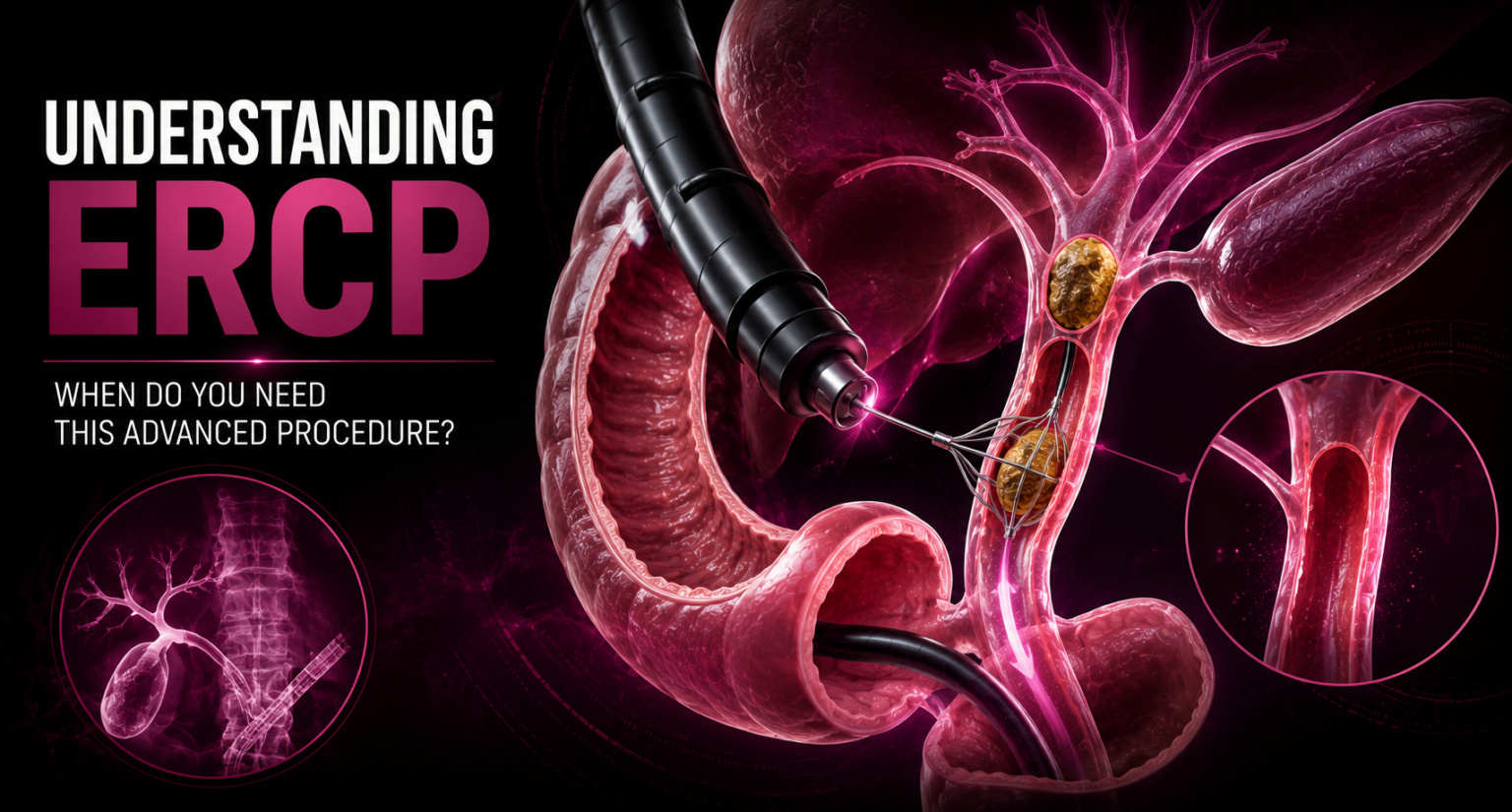
ERCP (Endoscopic Retrograde Cholangiopancreatography) is an advanced endoscopic procedure used to diagnose and treat problems affecting the bile ducts, gallbladder, pancreas, and pancreatic ducts. Unlike a standard endoscopy, ERCP combines a flexible endoscope with X-ray imaging, allowing doctors not only to identify the cause of certain conditions but also to treat them during the same procedure. It is commonly performed to remove bile duct stones, relieve blockages, place stents, or investigate unexplained jaundice and pancreatic disorders.
When Your Doctor Recommends an ERCP, It's Natural to Have Questions
Most people have heard of an endoscopy or a colonoscopy.
But when a doctor says, “You may need an ERCP,” the reaction is often very different.
“What exactly is an ERCP?”
“Is it a surgery?” “Will it be painful?”
“Why can’t I just have a regular endoscopy?”
These are common questions, and it’s understandable to feel anxious when you’re unfamiliar with the procedure.
The good news is that ERCP is a well-established and highly specialised procedure that has helped countless patients avoid more invasive surgery. In many cases, it allows doctors to diagnose and treat a problem during the same session, reducing the need for multiple procedures.
Whether you’ve been advised to undergo ERCP because of jaundice, bile duct stones, unexplained abdominal pain, or another digestive condition, understanding what the procedure involves can help you feel more confident and prepared.
In this article, we’ll explain what ERCP is, when it’s recommended, how it’s performed, and what you can expect before, during, and after the procedure.
What Is ERCP?
ERCP stands for Endoscopic Retrograde Cholangiopancreatography.
Although the name sounds complex, the concept is easier to understand when broken down.
It is a specialised procedure that combines endoscopy with X-ray imaging to examine and treat conditions affecting the:
- Bile ducts
- Gallbladder
- Pancreatic duct
- Pancreas
During the procedure, a gastroenterologist passes a thin, flexible tube called an endoscope through the amouth, down the food pipe, through the stomach, and into the first part of the small intestine (duodenum).
From there, specialised instruments can be guided into the opening where the bile and pancreatic ducts drain into the intestine. A contrast dye is then injected, allowing these ducts to be seen clearly on X-ray images.
If a problem such as a stone or blockage is identified, treatment can often be carried out immediately without the need for a separate operation.
This ability to diagnose and treat in a single session is what makes ERCP such a valuable procedure.
How Is ERCP Different from a Regular Endoscopy?
Many patients assume that ERCP is simply another type of upper gastrointestinal endoscopy.
While both procedures use an endoscope, their purpose is very different.
A standard upper endoscopy is mainly used to examine the lining of the oesophagus, stomach, and upper small intestine. It helps diagnose conditions such as ulcers, acid reflux, gastritis, or stomach bleeding.
ERCP, on the other hand, goes a step further.
Instead of focusing only on the digestive tract, it is specifically designed to access the bile ducts and pancreatic ducts, areas that cannot be evaluated adequately with a routine endoscopy.
In addition, ERCP allows doctors to perform treatments such as removing stones, placing stents, widening narrowed ducts, or collecting tissue samples when required.
Simply put, while a regular endoscopy helps doctors look, ERCP often helps them treat.
Why Might Someone Need an ERCP?
ERCP is not recommended for every digestive problem.
Your doctor may suggest this procedure when imaging tests or symptoms indicate a condition affecting the bile ducts or pancreas that requires both accurate diagnosis and possible treatment.
Some of the most common reasons include:
Bile Duct Stones
Sometimes, gallstones move out of the gallbladder and become trapped inside the common bile duct.
This can block the normal flow of bile and lead to pain, jaundice, fever, or infection.
ERCP allows many of these stones to be removed without the need for open surgery.
Blocked Bile Ducts
The bile ducts may become blocked due to stones, inflammation, scarring, or growths.
When bile cannot drain normally, it builds up in the body, leading to symptoms such as yellowing of the skin and eyes (jaundice), dark urine, pale stools, and itching.
ERCP can help identify the cause of the blockage and restore normal bile flow.
Narrowing (Strictures) of the Bile Ducts
Some patients develop narrowing of the bile ducts due to previous surgery, chronic inflammation, or other medical conditions.
During ERCP, the narrowed area can often be widened, and a temporary or permanent stent may be placed to keep the duct open.
Pancreatic Duct Disorders
ERCP may be used in selected patients with pancreatic duct abnormalities, chronic pancreatitis, or blockages affecting the normal flow of pancreatic juices.
The exact approach depends on the underlying condition and is carefully planned by the treating specialist.
Unexplained Jaundice
When blood tests and imaging show jaundice but the exact cause remains unclear, ERCP may help identify whether the problem lies within the bile ducts or pancreatic ducts.
In many cases, treatment can begin immediately if a blockage is found.
Bile Leaks After Surgery or Injury
Occasionally, bile may leak from the bile ducts after gallbladder surgery or abdominal trauma.
ERCP can help locate the leak and manage it using specialised techniques, often avoiding the need for another operation.
How Is an ERCP Performed?
One of the biggest reasons people feel anxious before an ERCP is simply because they don’t know what to expect.
Understanding the process beforehand can make the experience much less intimidating.
Although the exact steps may vary depending on the reason for the procedure, a typical ERCP follows a well-planned sequence.
Before the Procedure
Before your ERCP, your gastroenterologist will review your medical history, current medications, allergies, and any previous imaging or blood test results.
You’ll also have an opportunity to discuss the procedure, ask questions, and understand its benefits and possible risks before providing your consent.
Since ERCP is usually performed under sedation, you’ll be asked not to eat or drink for several hours beforehand. Your doctor may also advise temporary changes to certain medications, particularly blood thinners or diabetes medicines. Always follow your doctor’s instructions rather than stopping any medication on your own.
During the Procedure
Once you’re comfortably positioned in the endoscopy suite, you’ll receive medication to help you relax. Many patients become sleepy and remember very little of the procedure afterwards.
The gastroenterologist gently passes a thin, flexible endoscope through your mouth, down the oesophagus, through the stomach, and into the first part of the small intestine (the duodenum).
At this point, the doctor identifies a small opening called the major papilla, where the bile duct and pancreatic duct empty into the intestine.
Using specialised instruments passed through the endoscope, a tiny catheter is guided into the bile duct or pancreatic duct.
A special contrast dye is then injected, allowing these ducts to be clearly visualised using X-ray imaging.
Depending on what is found, your doctor may perform one or more treatments during the same procedure.
These may include:
- Removing bile duct stones.
- Widening a narrowed bile duct.
- Placing a stent to improve drainage.
- Taking tissue samples (biopsies) or brushings for further analysis.
- Treating certain bile leaks.
This ability to both diagnose and treat a condition during a single procedure is one of ERCP’s greatest advantages.
The procedure usually takes between 30 and 90 minutes, although the exact duration depends on the complexity of the condition being treated.
Is ERCP a Surgery?
This is one of the most common questions patients ask.
The answer is no.
ERCP is not an operation in the traditional sense.
Unlike open or laparoscopic surgery, ERCP does not involve cuts or incisions on the abdomen.
Instead, doctors reach the bile and pancreatic ducts through the body’s natural digestive passage using an endoscope.
Because there are no external surgical wounds, many patients experience:
- Less discomfort.
- Faster recovery.
- Shorter hospital stays.
- Earlier return to normal activities.
That said, ERCP is still an advanced medical procedure requiring specialised expertise, advanced equipment, and careful patient selection.
Not everyone with gallstones or pancreatic disease requires ERCP. Your gastroenterologist will recommend it only when it is likely to provide the greatest benefit.
What Are the Benefits of ERCP?
ERCP has transformed the way many bile duct and pancreatic disorders are managed.
In the past, some of these conditions required major surgery. Today, many can be treated using advanced endoscopic techniques.
Some important benefits include:
Diagnosis and Treatment in One Procedure
Perhaps the biggest advantage of ERCP is that it doesn’t simply identify the problem—it often allows doctors to treat it immediately.
Relief from Bile Duct Obstruction
Blocked bile ducts can lead to jaundice, infection, severe pain, and liver damage if left untreated.
ERCP can restore the normal flow of bile by removing the obstruction or placing a stent where necessary.
Avoiding More Invasive Surgery
For carefully selected patients, ERCP may eliminate the need for more extensive surgical procedures.
Although surgery is still required in certain situations, many conditions affecting the bile ducts can now be managed endoscopically.
Faster Recovery
Because ERCP does not involve external incisions, recovery is generally quicker than after traditional surgery.
Many patients are able to return home the same day or after a short period of observation, depending on the procedure performed and their overall health.
Are There Any Risks?
Like any medical procedure, ERCP carries some risks.
Fortunately, serious complications are uncommon, particularly when the procedure is performed by experienced specialists in appropriately selected patients.
Your doctor recommends ERCP only when the expected benefits outweigh the potential risks.
Some possible complications include:
Pancreatitis
Inflammation of the pancreas (pancreatitis) is the most recognised complication of ERCP.
Most cases are mild and improve with appropriate treatment, although more severe cases can occasionally occur.
Your doctor will assess your individual risk before the procedure and may take preventive measures where appropriate.
Bleeding
Bleeding may occur, particularly if a small cut (sphincterotomy) is made to remove stones or improve drainage.
In most cases, bleeding is mild and can often be managed during the procedure itself.
Infection
If bile cannot drain properly because of a blockage, infection may develop.
ERCP is often performed specifically to relieve these blockages, and antibiotics may be recommended in selected situations.
Perforation
A tear in the wall of the intestine or bile duct is rare but can occur.
Although uncommon, it may require additional treatment or surgery depending on its severity.
Sedation-Related Risks
Some patients may experience temporary side effects related to sedation, such as low blood pressure or breathing changes.
Throughout the procedure, your heart rate, blood pressure, oxygen levels, and breathing are continuously monitored by the medical team to ensure your safety.
How Should You Prepare for an ERCP?
Proper preparation helps the procedure go as smoothly and safely as possible. Your healthcare team will provide personalised instructions, but they generally include:
Do Not Eat or Drink Before the Procedure
You’ll usually need to fast for several hours before your ERCP.
An empty stomach reduces the risk of vomiting and aspiration during sedation.
Inform Your Doctor About Your Medications
Make sure your doctor knows about all prescription medicines, over-the-counter medications, vitamins, and herbal supplements you take. Some medicines, particularly blood thinners, may require temporary adjustment.
Tell Your Doctor About Allergies and Medical Conditions
Inform your healthcare team if you have:
- Diabetes
- Heart disease
- Kidney disease
- Previous reactions to contrast dye
- Medication allergies
- Bleeding disorders
This information helps your doctor plan the procedure safely.
Arrange for Someone to Take You Home
Because sedative medications can affect coordination and judgment for several hours, you’ll usually need a family member or friend to accompany you home after the procedure. Driving yourself is generally not recommended on the same day.
Follow Every Instruction Carefully
Preparation may seem like a small part of the process, but it plays an important role in ensuring the procedure is performed safely and effectively. If you’re unsure about any instruction, don’t hesitate to ask your healthcare team for clarification before the day of your ERCP.
What Happens After an ERCP?
Once the procedure is complete, you’ll be moved to a recovery area where the medical team will monitor you until the effects of the sedation begin to wear off.
Most patients feel drowsy for a few hours, which is completely normal. You may also notice a mild sore throat or some bloating caused by the air introduced during the procedure. These symptoms are usually temporary and improve on their own.
Depending on why the ERCP was performed and whether any additional treatment was carried out, your doctor will decide whether you can return home the same day or need a short hospital stay for observation.
Before you’re discharged, your healthcare team will explain:
- What was found during the procedure.
- Whether any stones were removed or a stent was placed.
- If tissue samples (biopsies) were taken.
- When and how you’ll receive your test results.
- Any dietary or activity restrictions you should follow.
- When your follow-up appointment is scheduled.
Carefully following these instructions plays an important role in your recovery.
Recovery After ERCP
Most people recover well after an ERCP and gradually return to their normal routine.
However, recovery varies depending on the reason for the procedure and whether therapeutic interventions—such as stone removal or stent placement—were performed.
During the first 24 hours, your doctor may advise you to:
- Rest at home.
- Drink plenty of fluids unless instructed otherwise.
- Start with light meals before returning to your usual diet.
- Avoid driving or operating machinery because of the sedative medication.
- Follow any medication instructions provided after the procedure.
If a stent has been placed or additional treatment is planned, your gastroenterologist will explain the next steps and any future procedures that may be required.
When Should You Seek Medical Attention?
Although most patients recover without any problems, it’s important to know when to contact your doctor or seek urgent medical care.
Seek medical attention immediately if you develop:
- Severe or worsening abdominal pain.
- Persistent vomiting.
- Fever or chills.
- Difficulty swallowing that continues to worsen.
- Black, tarry stools or significant rectal bleeding.
- Vomiting blood.
- Yellowing of the skin or eyes that becomes worse after the procedure.
- Chest pain or difficulty breathing.
These symptoms are uncommon, but they should never be ignored.
Prompt medical evaluation allows complications to be recognised and treated early.
Frequently Asked Questions
Will I be awake during an ERCP?
Most ERCP procedures are performed under sedation, which helps you remain relaxed and comfortable. Many patients remember very little of the procedure afterwards.
Is ERCP painful?
The procedure itself is generally not painful because sedation is used.
Some people experience a mild sore throat or temporary bloating afterwards, but these symptoms usually settle within a short time.
How long does an ERCP take?
Most ERCP procedures take 30 to 90 minutes, depending on the complexity of the condition and whether additional treatments such as stone removal or stent placement are required.
Will I need to stay in the hospital?
Many patients go home the same day after a period of observation.
However, if the procedure is more complex or if your doctor wants to monitor your recovery, a short hospital stay may be recommended.
Can ERCP remove gallstones?
ERCP is commonly used to remove gallstones that have become lodged in the common bile duct.
It does not remove stones that remain inside the gallbladder itself. If gallbladder stones are causing ongoing problems, your doctor may recommend gallbladder surgery separately.
What is a stent, and why might I need one?
A stent is a small tube placed inside a narrowed or blocked bile duct or pancreatic duct to help keep it open.
This allows bile or pancreatic fluid to drain normally and can relieve symptoms caused by obstruction.
Is ERCP safer than surgery?
ERCP and surgery are different procedures performed for different reasons.
For carefully selected patients, ERCP can often treat certain conditions without the need for open or laparoscopic surgery. However, some diseases still require an operation.
Your doctor will recommend the most appropriate treatment based on your diagnosis.
Will I need another ERCP in the future?
That depends on your condition.
Some patients require only one ERCP, while others—particularly those with recurring stones, certain strictures, or stents—may need follow-up procedures.
Your gastroenterologist will create an individualised treatment plan based on your progress.
That’s why regular screening plays such an important role in protecting long-term digestive health.
A Final Thought
Hearing that you need an ERCP can feel overwhelming, especially if you’ve never heard of the procedure before.
But understanding why it’s recommended often makes all the difference.
ERCP isn’t performed routinely—it is recommended when your doctor believes it can provide valuable information or, more importantly, treat the problem during the same procedure.
Whether it’s removing a bile duct stone, relieving a blockage, placing a stent, or helping diagnose a complex pancreatic or biliary condition, ERCP has transformed the way many digestive disorders are managed.
Instead of requiring major surgery, many patients can now receive effective treatment through a minimally invasive endoscopic approach.
The most important step is not to let fear or unfamiliarity delay appropriate care.
If your doctor has recommended an ERCP, take the time to ask questions, understand the procedure, and discuss any concerns. Being well informed helps you make confident decisions about your health.
Advanced ERCP Services at SIGLS
At Sai Institute of Gastroenterology & Liver Sciences (SIGLS), advanced endoscopic procedures such as ERCP are performed by experienced gastroenterologists using modern technology and evidence-based techniques.
Our team manages a wide range of conditions affecting the bile ducts, gallbladder, pancreas, and pancreatic ducts, with a focus on accurate diagnosis, minimally invasive treatment, and personalised patient care.
From evaluating unexplained jaundice to removing bile duct stones and treating complex biliary disorders, every patient receives an individualised treatment plan based on their clinical condition and diagnostic findings.
We believe that patients should understand not only what treatment is recommended, but also why it is needed. Clear communication, patient safety, and compassionate care remain at the heart of every procedure we perform.