Sai Institute of Gastroenterology And Liver Sciences

Everything You Need to Know About Colonoscopy: Myths vs Facts
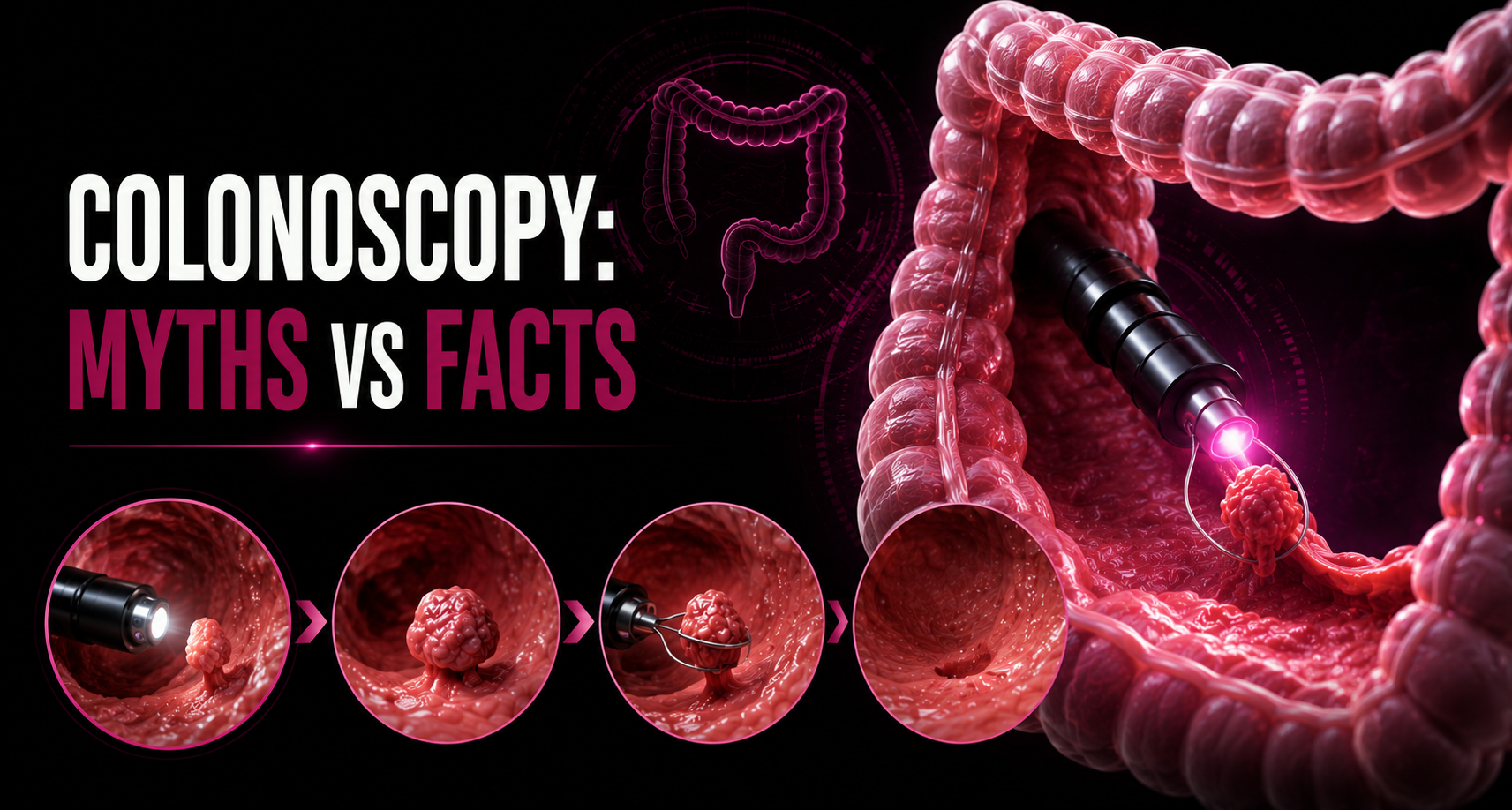
A colonoscopy is a safe and highly effective procedure used to examine the inside of the large intestine (colon and rectum). It helps diagnose digestive conditions, investigate symptoms such as rectal bleeding or persistent bowel changes, and most importantly, detect and remove precancerous polyps before they develop into colorectal cancer. Although many people worry about the procedure, modern colonoscopy is generally well tolerated and plays a vital role in protecting long-term digestive health.
The Word "Colonoscopy" Often Creates More Fear Than the Procedure Itself
For many people, the moment a doctor recommends a colonoscopy, anxiety takes over.
Questions start running through their mind:
“Will it be painful?” “Do I really need it?”
“What if they find something serious?”
“I’ve heard the preparation is terrible.”
These concerns are completely understandable. A colonoscopy is one of the most misunderstood medical procedures, and much of the fear surrounding it comes from stories shared by others or information found online rather than personal experience.
The reality is often very different.
A colonoscopy is not just a test to diagnose disease—it is also one of the few medical procedures that can help prevent colorectal cancer by detecting and removing precancerous growths before they become cancerous.
Every day, gastroenterologists perform colonoscopies to investigate digestive symptoms, identify the cause of bowel problems, and help patients receive timely treatment. For many people, the procedure provides reassurance by confirming that their symptoms are caused by a treatable condition rather than something more serious.
Understanding what a colonoscopy involves—and separating myths from facts—can make the experience far less intimidating.
In this article, we’ll explain what a colonoscopy is, why it’s performed, what to expect before and during the procedure, and address some of the most common misconceptions that prevent people from getting screened.
What Is a Colonoscopy?
A colonoscopy is an endoscopic procedure that allows a gastroenterologist to examine the inner lining of the large intestine, which includes the colon and rectum.
The procedure is performed using a long, flexible instrument called a colonoscope. This thin tube has a tiny high-definition camera and a light at its tip, allowing the doctor to view the inside of the bowel on a monitor in real time.
As the colonoscope is gently advanced through the rectum and colon, the doctor carefully examines the intestinal lining for any abnormalities, including:
- Polyps
- Inflammation
- Ulcers
- Bleeding
- Narrowing of the bowel
- Signs of colorectal cancer
- Other digestive conditions
If necessary, small tissue samples (biopsies) can be taken during the procedure for laboratory analysis.
One of the unique advantages of a colonoscopy is that it is both diagnostic and therapeutic. This means the doctor can often remove certain polyps during the same procedure, reducing the need for additional treatment.
Why Is a Colonoscopy Recommended?
A colonoscopy may be advised for many different reasons.
Sometimes it is performed because a person has symptoms that need further investigation.
In other cases, it is recommended even when someone feels perfectly healthy, as part of routine colorectal cancer screening.
Your doctor may recommend a colonoscopy if you have:
Persistent Changes in Bowel Habits
Ongoing diarrhoea, constipation, or alternating bowel habits that continue for several weeks should be evaluated to identify the underlying cause.
Blood in the Stool or Rectal Bleeding
Any unexplained bleeding from the rectum deserves medical attention.
While piles (haemorrhoids) are a common cause, bleeding can also occur due to polyps, inflammatory bowel disease, diverticular disease, or colorectal cancer.
A colonoscopy helps determine the exact source of bleeding.
Unexplained Abdominal Pain
Persistent abdominal pain, particularly when associated with other digestive symptoms, may require further evaluation of the colon.
Iron-Deficiency Anaemia
In some adults, unexplained iron-deficiency anaemia may result from slow bleeding within the digestive tract.
A colonoscopy can help identify the source when the lower gastrointestinal tract is suspected.
Screening for Colorectal Cancer
One of the most important reasons for a colonoscopy is screening.
Many colorectal cancers begin as small growths called polyps. These polyps usually do not cause symptoms in their early stages.
During a colonoscopy, many precancerous polyps can be removed before they have the chance to develop into cancer.
This is why a colonoscopy is considered not just a diagnostic procedure, but a preventive one.
Family History of Colorectal Cancer
People with a close family history of colorectal cancer or certain inherited bowel conditions may need screening earlier than the general population.
Your gastroenterologist will recommend the most appropriate screening schedule based on your individual risk factors.
Why Is Colonoscopy Considered the Gold Standard?
Several tests are available to evaluate bowel health, including stool-based screening tests and imaging studies.
However, a colonoscopy remains the gold standard because it offers advantages that many other tests cannot.
It allows doctors to:
- Directly examine the lining of the colon.
- Detect very small polyps that other tests may miss.
- Take biopsies immediately if needed.
- Remove many precancerous polyps during the same procedure.
- Confirm or rule out a wide range of digestive conditions with a high level of accuracy.
In many cases, a colonoscopy provides both the diagnosis and the treatment in a single sitting, making it one of the most valuable procedures in modern gastroenterology.
The Importance of Early Screening
One of the biggest misconceptions about colonoscopy is that it’s only needed after symptoms appear.
In reality, colorectal cancer often develops silently.
Precancerous polyps may remain in the colon for years without causing pain, bleeding, or any noticeable changes in bowel habits.
By the time symptoms develop, the disease may already be more advanced.
This is why screening is so important.
Finding and removing polyps before they become cancerous is one of the most effective ways to reduce the risk of colorectal cancer.
Rather than waiting for symptoms, screening allows doctors to detect problems at a stage when treatment is often simpler and outcomes are significantly better.
Colonoscopy: Myths vs Facts
Many people postpone or avoid a colonoscopy because they’ve heard stories from friends, relatives, or social media. While it’s natural to feel anxious about any medical procedure, misinformation often creates unnecessary fear.
Let’s look at some of the most common myths and understand the facts behind them.
Myth 1: Colonoscopy Is Extremely Painful
Fact: Most people tolerate a colonoscopy very well.
This is probably the most common concern patients have.
In reality, modern colonoscopy is generally performed with sedation or pain-relieving medication, allowing most patients to remain comfortable throughout the procedure. Many remember very little of the examination afterwards.
Some people may experience mild pressure, bloating, or abdominal discomfort because air or carbon dioxide is used to gently expand the colon for better visibility. These sensations are usually temporary and settle soon after the procedure.
For most patients, the anticipation is far worse than the actual experience.
Myth 2: I Only Need a Colonoscopy If I Have Symptoms
Fact: Screening is often recommended before symptoms develop.
Colorectal cancer usually begins as small growths called polyps. These polyps often cause no symptoms for many years.
Waiting until symptoms appear may mean the disease has already progressed.
A screening colonoscopy aims to detect and remove these polyps early, helping prevent colorectal cancer before it develops.
This preventive role is one of the biggest reasons why colonoscopy is considered so valuable.
Myth 3: A Colonoscopy Is Only for Older Adults
Fact: Age is important, but it’s not the only factor.
Routine colorectal cancer screening is generally recommended from a certain age for people at average risk, based on national and international guidelines.
However, younger individuals may also need a colonoscopy if they have:
- Blood in the stool
- Persistent changes in bowel habits
- Unexplained iron-deficiency anaemia
- Chronic abdominal pain
- A strong family history of colorectal cancer
- Inflammatory bowel disease or certain inherited conditions
Your doctor will recommend screening based on your individual risk rather than age alone.
Myth 4: The Bowel Preparation Is Worse Than the Procedure
Fact: Preparation can be inconvenient, but it is essential for an accurate examination.
Preparing for a colonoscopy involves following dietary instructions and taking a bowel-cleansing solution to empty the colon.
While many people consider this the least enjoyable part of the process, preparation methods have improved over the years.
A clean colon allows the doctor to see even small polyps and abnormalities clearly. Poor preparation can reduce the accuracy of the examination and may even require the procedure to be repeated.
Although preparation requires some planning, it plays a vital role in ensuring the best possible results.
Myth 5: Colonoscopy Is Only Used to Detect Cancer
Fact: It helps diagnose many digestive conditions.
A colonoscopy is used to investigate a wide range of gastrointestinal problems, including:
- Persistent diarrhoea
- Chronic constipation
- Rectal bleeding
- Inflammatory bowel disease
- Unexplained abdominal pain
- Polyps
- Diverticular disease
- Iron-deficiency anaemia
- Changes in bowel habits
While colorectal cancer screening is an important reason for the procedure, it is far from the only one.
Myth 6: If My Stool Test Is Normal, I Don’t Need a Colonoscopy
Fact: Stool tests and colonoscopy serve different purposes.
Certain stool-based screening tests can detect hidden blood or specific markers associated with colorectal cancer.
However, they cannot directly examine the inside of the colon or remove polyps.
If a stool test is abnormal—or if you have concerning symptoms or a higher-than-average risk—your doctor may still recommend a colonoscopy.
Myth 7: Colonoscopy Is Dangerous
Fact: Serious complications are uncommon.
Like any medical procedure, a colonoscopy carries some risks. However, it is considered very safe when performed by trained specialists using appropriate equipment and protocols.
Rare complications may include bleeding, particularly after removal of a large polyp, or a small tear (perforation) in the bowel wall.
Fortunately, these complications are uncommon, and for most people the benefits of timely diagnosis and prevention far outweigh the risks.
Myth 8: Women Don’t Need Colonoscopy
Fact: Colorectal cancer affects both men and women.
Although many people associate colorectal cancer with men, women are also at risk.
Screening recommendations apply to eligible individuals regardless of gender, and women with symptoms or risk factors should not delay evaluation.
Myth 9: If Polyps Are Found, It Means I Have Cancer
Fact: Most polyps are not cancerous.
Finding a polyp during a colonoscopy does not automatically mean you have cancer.
In fact, many polyps are benign (non-cancerous). Some have the potential to become cancerous over time, which is why removing them early is so beneficial.
The removed tissue is sent for laboratory analysis to determine its exact nature and whether any further treatment or surveillance is required.
Myth 10: One Colonoscopy Lasts a Lifetime
Fact: Future screening depends on your results and individual risk.
The timing of your next colonoscopy depends on several factors, including:
- Whether polyps were found
- The type and size of the polyps
- Your age
- Family history
- Personal medical history
- The quality of bowel preparation
Some people may not need another colonoscopy for many years, while others require closer follow-up.
Your gastroenterologist will recommend an appropriate screening schedule based on current medical guidelines.
How Should You Prepare for a Colonoscopy?
Good preparation is one of the most important parts of a successful colonoscopy.
A well-prepared bowel allows your doctor to examine the lining of the colon clearly and identify even small abnormalities.
Although your healthcare team will provide detailed instructions, preparation generally includes:
Following a Special Diet
You may be advised to avoid high-fibre foods for a short period before the procedure and switch to a clear liquid diet the day before.
Following these instructions carefully improves the quality of the examination.
Taking the Bowel Preparation Solution
A prescribed bowel-cleansing solution is taken according to specific instructions to empty the colon.
This step is essential because any remaining stool can hide small polyps or other abnormalities.
Discussing Your Medications
Certain medications, including blood thinners, diabetes medications, or iron supplements, may need temporary adjustment.
Always discuss your medications with your doctor before making any changes.
Arranging Transportation
If sedation is used, you’ll usually need someone to accompany you home after the procedure, as driving immediately afterwards is generally not recommended.
What Happens During a Colonoscopy?
Knowing what to expect often helps reduce anxiety.
After arriving at the endoscopy unit, you’ll be welcomed by the medical team, who will explain the procedure and answer any last-minute questions.
If sedation is planned, it will be administered before the examination begins.
If polyps are found, many can be removed immediately. If an area appears abnormal, a biopsy may be taken for further analysis.
The procedure itself usually takes around 20 to 45 minutes, although the exact duration varies depending on the individual findings and whether additional interventions are required.
Following the examination, you’ll spend a short period in recovery until you’re ready to return home.
What Happens After a Colonoscopy?
Most people are pleasantly surprised by how quickly they recover after a colonoscopy.
If sedation has been used, you’ll spend a short time in the recovery area until you’re fully awake. Because the medication can temporarily affect your alertness, you’ll usually be advised not to drive or operate heavy machinery for the rest of the day.
It’s common to experience mild bloating or pass gas after the procedure. This happens because air or carbon dioxide is introduced into the colon during the examination to improve visibility. These symptoms usually settle within a few hours.
If no additional procedures have been performed, many people can return to their normal routine the following day. Your doctor will advise you when you can resume your regular diet, medications, and daily activities.
If a biopsy was taken or a polyp was removed, you may receive specific instructions regarding follow-up care and when to expect your results.
Is Colonoscopy Safe?
Yes. A colonoscopy is considered a safe and well-established procedure when performed by trained specialists.
Like any medical procedure, it carries some risks, but serious complications are uncommon.
Potential risks may include:
- Bleeding, particularly after the removal of a large polyp.
- A small tear (perforation) in the wall of the colon.
- Reactions to sedative medications.
- Temporary abdominal discomfort or bloating.
Although these complications are rare, your medical team will discuss them with you before the procedure and take every precaution to minimise risk.
For most people, the benefits of detecting disease early—or preventing colorectal cancer altogether—far outweigh the potential risks.
When Should You Consult a Gastroenterologist?
You should consider consulting a gastroenterologist if you experience:
- Blood in your stool or rectal bleeding.
- Persistent diarrhoea or constipation lasting several weeks.
- Ongoing changes in bowel habits without a clear cause.
- Unexplained abdominal pain.
- Unintentional weight loss.
- Iron-deficiency anaemia without an obvious reason.
- A family history of colorectal cancer or advanced polyps.
- A positive stool-based screening test.
- Persistent digestive symptoms that don’t improve with treatment.
Seeking medical advice early doesn’t necessarily mean something serious is wrong. In many cases, symptoms are caused by conditions that can be managed effectively once properly diagnosed.
Frequently Asked Questions
At what age should I have my first colonoscopy?
For people at average risk, screening generally begins around the age recommended by national and international guidelines. However, those with a family history of colorectal cancer, inherited conditions, or certain digestive diseases may need to start earlier. Your doctor will recommend the most appropriate screening schedule based on your individual risk.
Is a colonoscopy painful?
Most patients tolerate the procedure well. Sedation is commonly used, helping many people remain comfortable and remember very little of the examination.
How long does a colonoscopy take?
The procedure itself usually takes 20 to 45 minutes, depending on the findings and whether additional procedures such as polyp removal are performed.
Can I eat after a colonoscopy?
In most cases, yes.
Once you’ve recovered from sedation, your doctor will advise you when you can resume eating. Many people return to their normal diet the same day unless specific instructions have been given.
What happens if a polyp is found?
Many polyps can be removed during the colonoscopy itself.
The removed tissue is then sent to a laboratory for detailed examination. Most polyps are not cancerous, but removing them early helps reduce the risk of colorectal cancer developing in the future.
How often do I need a colonoscopy?
The interval depends on your age, personal and family history, the findings of the procedure, and whether any polyps were removed.
Some people may not need another colonoscopy for several years, while others require closer surveillance.
Can a colonoscopy detect conditions other than cancer?
Yes.
A colonoscopy helps diagnose a wide range of digestive disorders, including inflammatory bowel disease, diverticular disease, polyps, bleeding sources, and other abnormalities affecting the colon and rectum.
Can I prevent colorectal cancer with a colonoscopy?
A colonoscopy is one of the few screening tests that can help prevent colorectal cancer by detecting and removing certain precancerous polyps before they become cancerous.
That’s why regular screening plays such an important role in protecting long-term digestive health.
A Final Thought
It’s completely normal to feel anxious when a colonoscopy is recommended.
For many people, the fear comes from the unknown rather than the procedure itself.
The reality is that a colonoscopy is one of the most valuable tools in modern gastroenterology. It doesn’t just help doctors diagnose digestive conditions—it also offers the opportunity to prevent colorectal cancer by identifying and removing precancerous polyps at an early stage.
If your doctor has recommended a colonoscopy, think of it as an investment in your future health rather than something to be feared.
A few hours spent undergoing a preventive examination today could help avoid far more complex treatments later.
Sometimes, the most important benefit of a colonoscopy isn’t what it finds.
It’s what it helps prevent.
Advanced Colonoscopy Services at SIGLS
At Sai Institute of Gastroenterology & Liver Sciences (SIGLS), colonoscopy is performed using modern endoscopic technology by experienced gastroenterologists dedicated to the early detection and management of digestive diseases.
Whether you’re undergoing a routine screening, investigating persistent digestive symptoms, or requiring evaluation of a known bowel condition, every procedure is planned with a focus on patient comfort, safety, and accurate diagnosis.
Our specialists are experienced in detecting and removing precancerous polyps, diagnosing colorectal disorders, and providing personalised guidance based on each patient’s individual risk factors and clinical findings.
We believe that informed patients make confident healthcare decisions. That’s why we encourage timely evaluation, evidence-based care, and open communication at every step of your journey.