Sai Institute of Gastroenterology And Liver Sciences

Acid Reflux vs GERD: When Should You Visit a Gastroenterologist?
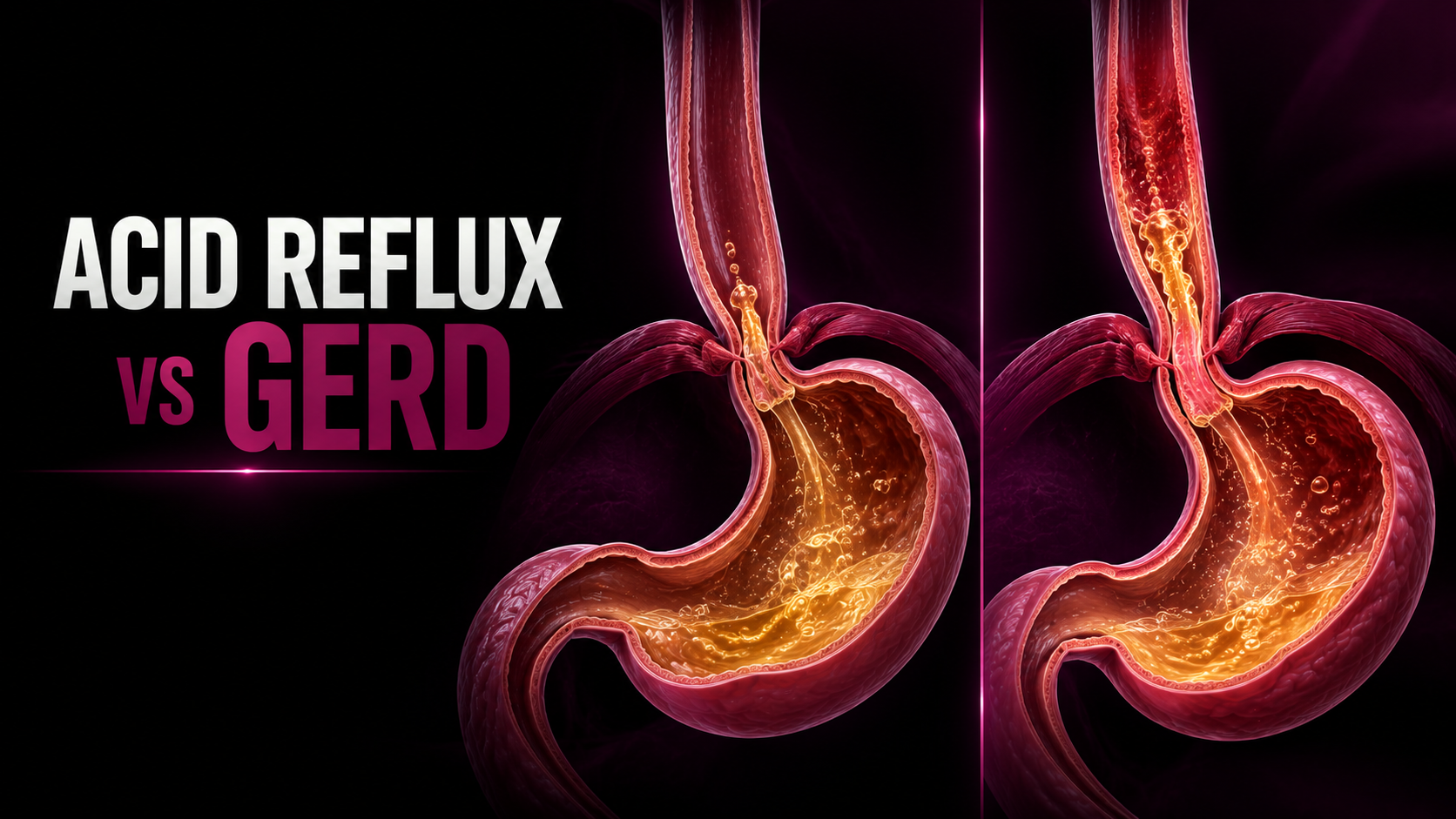
Almost everyone experiences acidity or heartburn occasionally.
You may notice a burning sensation in your chest after a heavy meal, a sour taste in your mouth after lying down, or an uncomfortable feeling that seems to travel upward from your stomach.
Usually, these episodes settle on their own.
But what happens when they keep coming back?
If you regularly experience heartburn, acid coming back into your throat, or discomfort after meals, you may have heard the term GERD.
Acid reflux and GERD are closely related, but they aren’t exactly the same thing. Understanding the difference can help you recognise when occasional symptoms have become a problem that deserves medical attention.
What Is Acid Reflux?
Acid reflux happens when stomach contents flow backwards into the oesophagus—the tube connecting your mouth to your stomach.
The stomach is designed to handle acidic digestive juices, but the oesophagus is more sensitive to them.
A ring of muscle called the lower oesophageal sphincter normally helps prevent stomach contents from moving upwards. When this barrier relaxes inappropriately or doesn’t close effectively, reflux can occur.
You may experience:
- A burning sensation in the chest (heartburn).
- A sour or bitter taste in the mouth.
- Food or liquid coming back into the throat.
- Burning or discomfort after meals.
- Symptoms that become worse when lying down.
Occasional reflux is common and doesn’t necessarily mean you have a disease.
What Is GERD?
GERD stands for Gastroesophageal Reflux Disease.
It refers to a condition in which reflux becomes frequent or troublesome enough to cause persistent symptoms or complications.
In simple terms: Acid reflux is an event. GERD is a condition.
Occasional reflux after a large meal may not require medical treatment.
But when reflux happens repeatedly, affects your daily life or sleep, or causes injury to the oesophagus, it may be GERD.
The exact symptoms and severity vary from person to person.
Acid Reflux vs GERD: What's the Difference?
The terms are sometimes used interchangeably, but there is an important distinction.
| Occasional Acid Reflux | GERD |
|---|---|
| Happens from time to time | Occurs repeatedly or causes troublesome symptoms |
| May follow a large or trigger meal | Can occur regularly and interfere with daily life |
| Usually settles without ongoing treatment | May require medical evaluation and treatment |
| Does not necessarily cause lasting damage | Can cause oesophageal inflammation or other complications |
There isn’t a single symptom that automatically determines whether someone has GERD.
The frequency, severity, impact on daily life, and presence of complications all matter.
Common Symptoms of GERD
Heartburn is probably the symptom most people associate with GERD, but it isn’t the only one.
Common symptoms can include:
Heartburn: A burning sensation behind the breastbone, often after eating.
Regurgitation: A feeling that food, liquid, or a sour substance is coming back up into the throat or mouth.
Difficulty Swallowing: Some people may feel that food is sticking or taking longer to pass.
Chest or Upper Abdominal Discomfort: Reflux can cause discomfort in the chest or upper abdomen.
Night-Time Symptoms: Reflux may become more noticeable when lying down, potentially disturbing sleep.
Some people also experience throat-related symptoms such as chronic cough, throat clearing, or hoarseness. However, these symptoms can have many causes, so they should not automatically be attributed to reflux.
Why Does Acid Reflux Happen?
Several factors can contribute to reflux.
Large meals can increase pressure inside the stomach. Lying down soon after eating can also make reflux more likely.
Some people notice that particular foods or drinks trigger their symptoms.
Commonly reported triggers include:
- Fatty or heavy meals.
- Spicy foods.
- Chocolate.
- Coffee or other caffeinated drinks.
- Carbonated beverages.
- Certain acidic foods.
However, there is no universal “GERD diet.”
A food that triggers symptoms in one person may cause no problem for another.
Instead of unnecessarily eliminating large numbers of foods, it can be more useful to identify your own triggers.
When Should You See a Gastroenterologist?
Occasional heartburn doesn’t necessarily mean you need to see a specialist.
But you should consider medical evaluation if your symptoms are frequent, persistent, worsening, or interfering with your everyday life.
A gastroenterologist can be particularly helpful when:
- Heartburn keeps returning.
- Symptoms frequently disturb your sleep.
- You regularly need medication to control reflux symptoms.
- Food seems to stick while swallowing.
- You have persistent regurgitation.
- Symptoms continue despite lifestyle changes or treatment.
- You experience unexplained weight loss.
- You have persistent vomiting.
- You develop signs of gastrointestinal bleeding.
The important point is not to judge the severity of reflux only by how uncomfortable it feels.
Persistent symptoms deserve an explanation.
Warning Signs You Should Not Ignore
Some symptoms associated with reflux require prompt medical assessment because they can indicate complications or another underlying condition.
These include:
Difficulty or Pain With Swallowing
If swallowing becomes difficult or painful, don’t simply assume it is “acidity.”
Unexplained Weight Loss
Losing weight without trying should always be evaluated.
Vomiting Blood or Black Stools
These can indicate gastrointestinal bleeding and require urgent medical attention.
Persistent Vomiting
Repeated vomiting is not something that should be attributed to routine reflux without evaluation.
Chest Pain
Not all chest pain is caused by acid reflux. New, severe, or unexplained chest pain—especially with breathlessness, sweating, dizziness, or pain spreading to the arm or jaw—requires urgent medical assessment.
Does Everyone With GERD Need an Endoscopy?
No.
An endoscopy is not automatically required for everyone with heartburn.
A gastroenterologist considers your symptoms, age, medical history, response to treatment, and the presence of warning signs before deciding whether an endoscopy or another investigation is appropriate.
An upper gastrointestinal endoscopy allows the doctor to examine the oesophagus, stomach, and upper part of the small intestine.
It may be recommended when there are alarm symptoms, suspected complications, persistent symptoms despite appropriate treatment, or other clinical reasons to investigate further.
In some patients, the diagnosis can be made based on symptoms and response to treatment without immediate endoscopy.
Can GERD Be Managed?
Yes. GERD can often be managed effectively.
Treatment depends on the severity of symptoms and whether complications are present.
Your doctor may recommend lifestyle changes such as:
- Avoiding meals close to bedtime.
- Eating smaller meals if large meals trigger symptoms.
- Identifying and limiting personal food triggers.
- Maintaining a healthy weight where appropriate.
- Raising the head of the bed for troublesome night-time symptoms.
- Avoiding smoking.
Medications may also be prescribed when necessary.
Common medicines used for reflux include acid-suppressing medications such as proton pump inhibitors (PPIs) and, in some situations, other acid-reducing medicines.
The choice and duration of treatment should be discussed with a healthcare professional, particularly when symptoms are frequent or long-lasting.
Can Acid Reflux Cause Complications?
Persistent GERD can sometimes cause inflammation and damage to the oesophagus.
Possible complications include:
- Oesophagitis.
- Narrowing of the oesophagus (stricture).
- Barrett’s oesophagus.
Barrett’s oesophagus involves changes in the lining of the lower oesophagus associated with long-standing reflux. It does not mean that a person has cancer, but it can increase the risk of oesophageal cancer in some patients.
This is one reason persistent reflux shouldn’t simply be ignored.
Frequently Asked Questions
Is acidity the same as GERD?
Not necessarily. Occasional acid reflux is common, while GERD refers to recurrent or troublesome reflux that may cause persistent symptoms or complications.
How often is acid reflux considered abnormal?
There isn’t one number that applies perfectly to everyone. Frequent or troublesome symptoms, especially those affecting sleep or daily activities, deserve medical evaluation.
Can GERD go away permanently?
Some people can control their symptoms very well with lifestyle changes and treatment. Others may experience recurring symptoms and require longer-term management.
Is heartburn always caused by acid reflux?
No. Chest discomfort can have several causes. New, severe, or unexplained chest pain should not automatically be assumed to be heartburn.
Can GERD cause cancer?
Long-standing GERD can increase the risk of Barrett’s oesophagus, and Barrett’s can increase the risk of oesophageal cancer. However, most people with GERD do not develop cancer.
Should I take acidity medicine every day?
If you regularly need medication to control reflux symptoms, it is worth discussing this with a doctor rather than continuing self-medication indefinitely. The appropriate medicine and duration depend on the individual situation.
Don't Ignore Reflux That Keeps Coming Back
Occasional heartburn after a heavy meal is usually very different from reflux that repeatedly interrupts your sleep, affects your daily activities, or requires frequent medication.
Understanding that difference is important.
Acid reflux can be occasional. GERD is a condition that may require ongoing management.
If your symptoms are frequent, persistent, getting worse, or accompanied by warning signs such as difficulty swallowing, unexplained weight loss, persistent vomiting, or bleeding, speak with a healthcare professional.
You don’t need to assume that every episode of acidity is serious. But you also shouldn’t let persistent symptoms go unexplained.
A gastroenterologist can help determine whether you’re dealing with occasional reflux, GERD, or another digestive condition—and whether further testing or treatment is necessary.
Gastroenterology Care at SIGLS
At Sai Institute of Gastroenterology & Liver Sciences (SIGLS), patients with persistent reflux and other gastrointestinal symptoms can receive specialist evaluation to identify the underlying cause and determine an appropriate treatment plan.
Depending on the patient’s symptoms and clinical findings, evaluation may include medical assessment, medication review, endoscopy, or other investigations when required.
The focus is not simply on controlling acidity temporarily, but on understanding persistent symptoms and providing appropriate, evidence-based care.